 Holiday Routes
An Amalfi Coast road trip by electric car: five days from Naples to Salerno
On this page
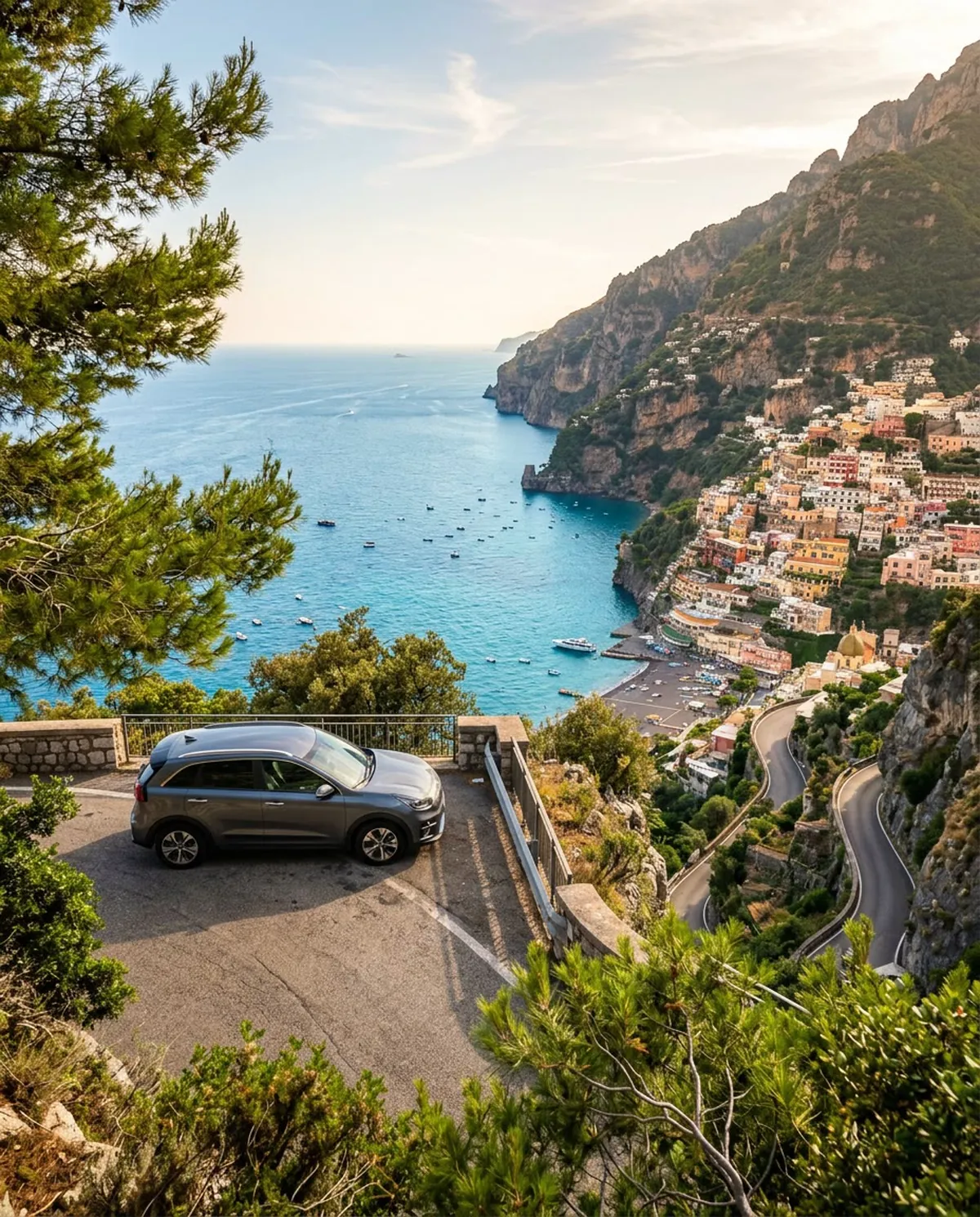
Planning an Amalfi Coast road trip in an electric car sounds daunting when you picture tight switchbacks, clinging cliffside traffic, and historic villages. Yet with short driving distances and chargers placed along the Sorrentine Peninsula and the Gulf of Salerno, driving an electric vehicle here is remarkably smooth. This five-day route from Naples to Salerno shows you how to manage the climbs, pace your days, and enjoy every scenic curve.
The route at a glance: five days from Naples to Salerno
The Amalfi drive is famous for dramatic scenery, but daily distances are actually very short. The entire journey spans roughly 188 kilometres spread over five relaxed stages, leaving plenty of hours each day to explore cliffside towns, quiet gardens, and coastal lookouts.
- Day 1: Naples to Sorrento (68 km, 2h 00m). Pick up your vehicle, climb past Gran Cono del Vesuvio for sweeping views across the bay, and head down into Sorrento to stroll through Piazza Tasso and the historic centre.
- Day 2: Sorrento to Positano (36 km, 1h 30m). Take the scenic loop towards Termini and the Punta Campanella trail overlooking Capri, then follow the coastal road to the Belvedere di Positano lookout before descending toward town.
- Day 3: Positano to Amalfi (22 km, 1h 10m). Follow the Strada Statale 163 along sheer rock walls, stopping at the dramatic Fiordo di Furore gorge before reaching Amalfi to visit the Duomo di Amalfi.
- Day 4: Amalfi to Ravello (28 km, 1h 15m). Head uphill to peaceful Ravello to explore the cliffside terraces of Villa Cimbrone Gardens, followed by an inland loop through Valico di Chiunzi and the green Tramonti Valley.
- Day 5: Ravello to Salerno (34 km, 1h 20m). Wind down through the fishing village of Borgo Marinaro di Cetara and continue along the gulf to finish your journey below the historic Castello di Arechi in Salerno.
Where to charge along the coast road
When you take an electric car on an EV road trip with planned charging stops, charging on the Amalfi Coast requires a slightly different mindset than driving on a high-speed motorway. You will rarely need rapid motorway charging hubs because daily distances are under 70 kilometres. Instead, destination charging while parked is your best strategy.
Sorrento and Salerno offer standard public chargers in central parking garages and near railway stations. On the narrow stretch of the SS163 between Positano and Amalfi, rapid public chargers are rare. The easiest approach is booking accommodation that offers on-site destination charging overnight. Plugs in hotel garages let you start each morning with a full battery, eliminating any need to hunt for charging points during sightseeing stops.
Public charging locations change and network access varies, so always check before you go. Having accounts with multiple European charging apps ensures you can easily start a session at municipal public posts throughout Campania.
Handling elevation, hills, and range on the cliffs
The Amalfi Coast rises steeply from sea level to mountain passes like Valico di Chiunzi. Climbing hundreds of metres up into Ravello or around Mount Vesuvius demands noticeably more energy from your battery than driving on flat motorways.
Fortunately, regenerative braking works in your favour on the return descent. As you wind down the switchbacks from Ravello to the coastline or descend from Vesuvius, your electric car reclaims a good portion of that energy. When planning your route, keep elevation changes on mountain roads in mind so steep uphill climbs never catch you by surprise. Running air conditioning in heavy summer traffic also consumes battery power, so maintaining a comfortable buffer of estimated battery percentage keeps your trip completely stress-free.
Planning tip: Drive the coast from west to east (Naples toward Salerno). In Italy, driving on the right puts your car on the seaside lane, giving your passengers uninterrupted sea views and making it much simpler to pull into coastal scenic viewpoints.
Driving rules, traffic, and parking on the SS163
Driving the famous SS163 road requires patience and focus. The tarmac is narrow, buses navigate tight blind bends, and parking spaces fill quickly. In peak holiday periods, local authorities often enforce alternate-plate driving restrictions on specific days along the coast road between Positano and Vietri sul Mare. Regulations change each season, so check local transport notices before setting off.
Parking in towns like Positano and Amalfi must be planned ahead. Street parking is restricted to residents in many historical zones, and commercial public garages charge premium hourly rates. Reserve parking in advance through your hotel whenever possible, or arrive early in the morning before day-tripper traffic peaks.
Where to stay along the Gulf of Naples and Amalfi
Splitting your stays between different towns lets you experience the distinct character of each stop without rushing back each evening. Spending your first night in Sorrento gives you easy access to lively piazzas and calm seaside dining. Moving on to Positano or Amalfi places you right in the heart of the dramatic vertical coastline.
For a quieter atmosphere with sweeping views, consider an overnight stop higher up in Ravello. Staying above the coast gives you cooler evening air, quiet terrace gardens, and effortless morning access to the inland mountain passes before moving on to Salerno.
The best time of year for a coastal road trip
Spring (late April to early June) and autumn (September to October) offer the ideal combination of pleasant temperatures, moderate traffic, and open roadside terraces. July and August bring heavy congestion and high daytime heat, which can make navigating the tight curves and finding parking considerably harder.
Winter brings peaceful roads and authentic village life, though ferry schedules are limited and some seasonal hotels and restaurants close. Whatever month you choose, coastal weather can shift quickly, so check local forecasts and road conditions before driving over high passes.
How Holiday Routes plans your EV journey
Holiday Routes takes the guesswork out of planning electric road trips across mountainous terrain. When you build a multi-day itinerary, each driving stage calculates realistic travel times alongside public charging stations along your path.
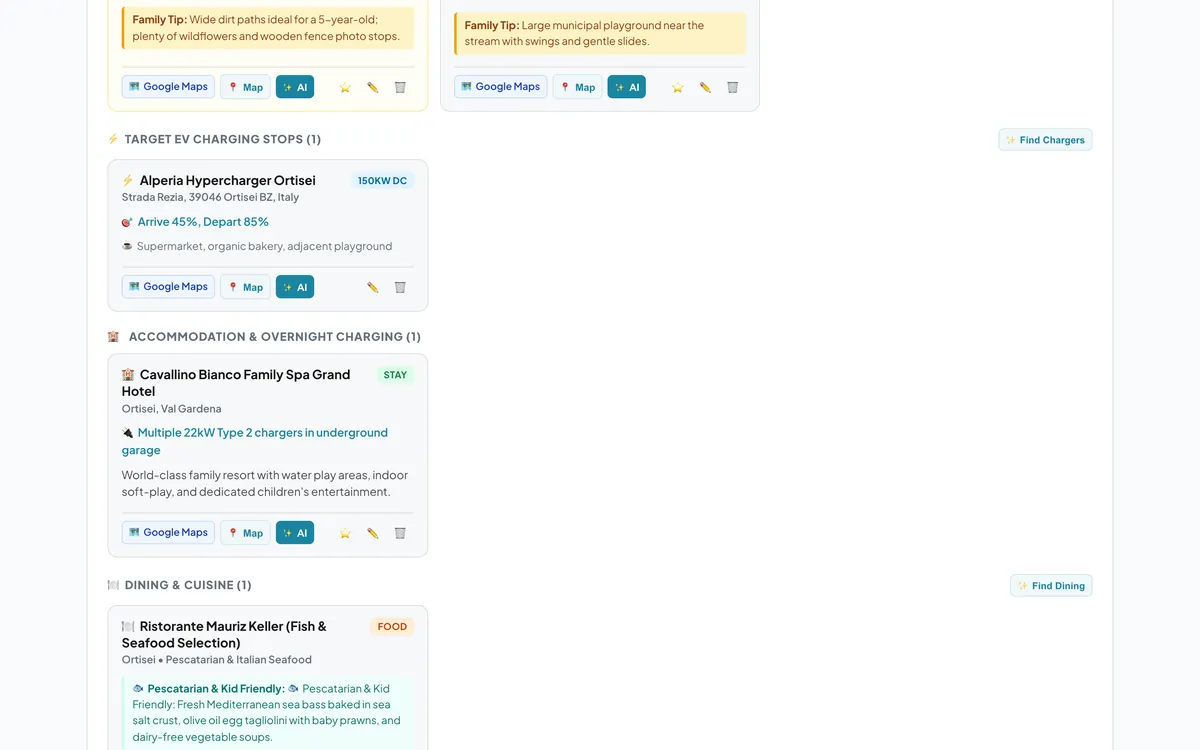
The planner estimates arrival and departure battery percentages for every stop, taking into account the elevation profile of each climb and the season. You can easily adjust your daily rhythm, swap sights, and keep all your hotel notes and confirmations organised in one clean timeline.
Frequently asked questions
Can you drive an electric car on the Amalfi Coast?
Yes. Daily driving distances are short, usually between 20 and 70 kilometres, which means you consume very little total battery each day. Booking overnight destination charging at your hotel makes the trip effortless.
Are there electric car charging stations in Positano and Amalfi?
Rapid motorway-style chargers are rare directly along the cliffside road. However, several private parking garages and hotels in Sorrento, Positano, Amalfi, and Ravello offer destination charging posts for overnight guests.
Are there driving restrictions on the Amalfi Coast road?
Yes. During peak summer months and holiday weekends, local authorities frequently apply alternate-plate driving rules for tourists along the SS163. Check current municipal driving rules before your trip.
What is the best vehicle size for the Amalfi Coast?
A compact or mid-size electric car is ideal. Narrow village streets, tight hairpin bends, and tight underground hotel parking structures are far easier to navigate in a smaller vehicle.
Plan your next trip with Holiday Routes
Free to start. Build a complete day-by-day plan, then change anything.
Plan your trip free →Keep reading

A Bucharest to Seville road trip: 14 days across southern Europe
A 14-day Bucharest to Seville road trip through seven countries: the route day by day, where to stop, borders and tolls, and what to check first.
Read the article →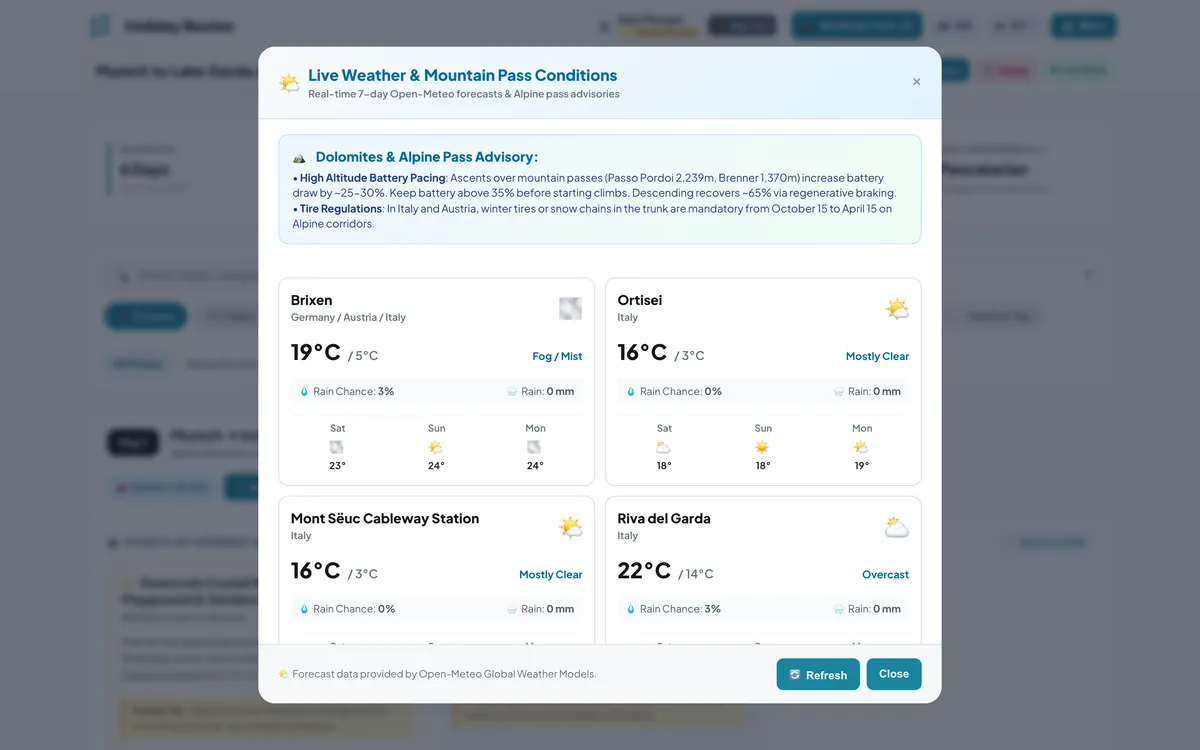
Alpine pass weather checks: how to handle first snow and stay safe on mountain routes
Monitor alpine pass weather, watch for early autumn snow, and plan lower detour routes before crossing high mountain passes on your next road trip.
Read the article →
How to Plan Road Trip Stays Without Retyping Your Entire Itinerary
Plan your summer family road trip and search overnight stays along your route without retyping dates, towns, or travellers each time.
Read the article →