 Holiday Routes
Alpine pass weather checks: how to handle first snow and stay safe on mountain routes
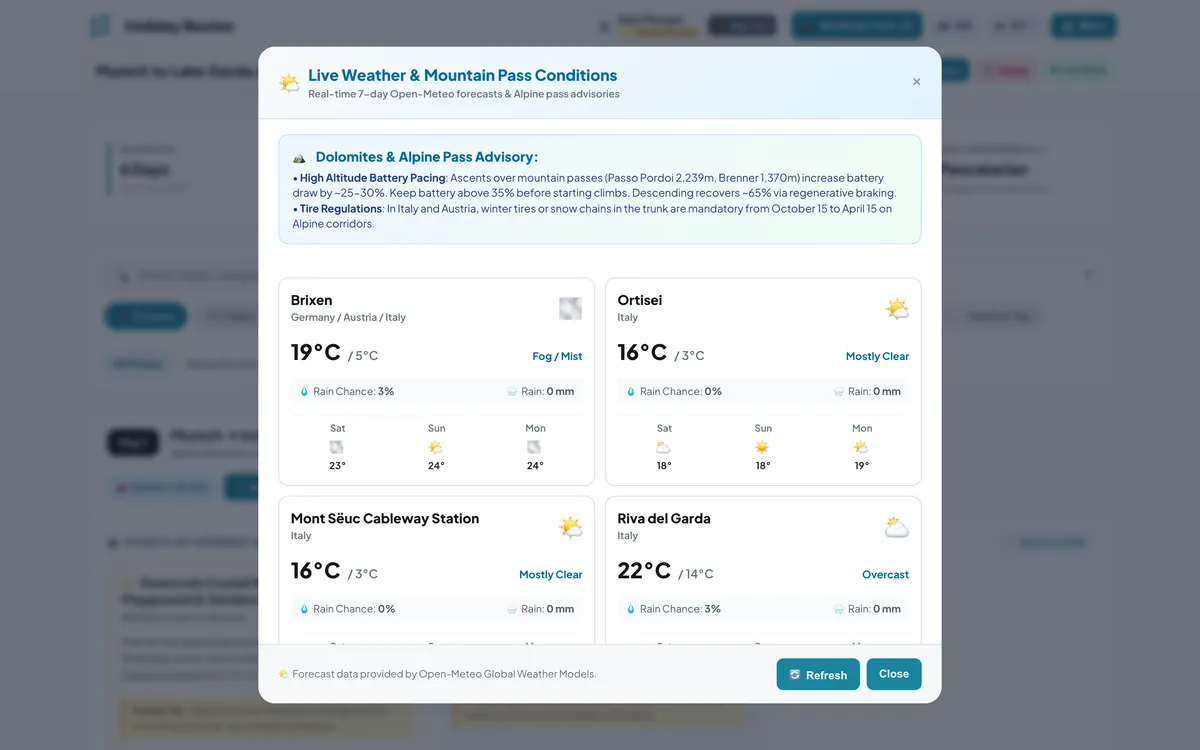
Autumn driving through high mountain corridors can deliver golden larch forests one minute and sudden icy squalls the next. Tracking alpine pass weather well before you climb out of the valley keeps unexpected snow from turning a scenic detour into a stressful freeze. A little advance preparation helps you enjoy the views while staying firmly in control.
Why early mountain snow catches travellers off guard
Down in the foothill towns, October and late spring can feel mild and pleasant. You might leave breakfast in light knitwear under blue skies, unaware that conditions change dramatically over the next thousand metres of ascent. Air temperatures drop roughly 6.5°C for every 1,000 metres you gain, meaning a mild 10°C morning in the valley easily translates to sub-zero precipitation near the summit.
Early seasonal snow is notoriously unpredictable. Weather systems sweep across high crests rapidly, leaving slush or black ice on shaded hairpin turns while surrounding roads remain completely clear. Cloud cover also clings to northern ridges, dropping visibility down to a few car lengths without warning.
Relying on city-level forecasts when crossing the Alps or Pyrenees will mislead you. Always look at the specific elevation of the crest rather than the town where you woke up. Checking the sky and the summit forecast before breakfast gives you the hours you need to adjust your route calmly.
How to read summit temperatures and freezing levels
When you monitor high-elevation forecasts, focus on two key data points: the freezing level (the zero-degree isotherm) and overnight summit lows. If the freezing line dips below the highest point of your pass, any moisture on the tarmac will freeze into hard-to-spot ice, especially through shadowed avalanche sheds and bridge decks.
Wind speed matters just as much as temperature. Gusts above 50 km/h strip heat rapidly, drive freezing rain sideways, and cause sudden drifting across unprotected ridges. Even light flurries can settle quickly when biting crosswinds blow across exposed cols.
If you drive an electric car, cold summit conditions also demand extra battery energy for cabin heating and battery conditioning. Combining weather awareness with sensible elevation-aware range planning helps you reach the crest with power to spare.
Winter equipment, tyres, and local regulations
Tyre grip is your primary lifeline in mountain terrain. Summer rubber hardens and loses adhesion as soon as tarmac temperatures fall below 7°C, long before visible ice forms on the road. Once slush or wet snow settles, summer tyres cannot clear the tread pattern safely.
Legal requirements for winter equipment differ by country, region, and calendar date. Some jurisdictions mandate certified winter tyres or snow chains on board from early autumn, while others enforce signs requiring chains only during active snowfall. Because local rules and dates change, always check the exact regional requirements before you set off.
Practise fitting your snow chains at home on dry pavement before your trip. Trying to untangle cold metal links with numb fingers beside an unlit mountain road during an evening blizzard is an experience best avoided. Pack a sturdy pair of work gloves, a torch, and an ice scraper in your boot within easy reach.
Always map a lower valley detour in reserve
Flexibility is the golden rule of mountain travel. High alpine crossings like the Stelvio, Furka, or Grossglockner close periodically for clearing or shut entirely for the winter season when heavy snow sets in. Major transit corridors like the Brenner Pass remain open year-round with frequent salting, but local connecting cols can shut at short notice.
Never treat a high pass as your only option. Whenever your day's journey climbs through alpine terrain, identify a lower tunnel route or wider valley motorway before leaving. Having an alternative corridor saved on your route timeline prevents last-minute panic if a pass suddenly closes.
A lower detour might add a modest distance or motorway toll, but it eliminates the danger of navigating steep descents in poor visibility. Arriving relaxed and safe at your evening stop is always worth more than forcing a crossing in heavy weather.
Planning tip: High mountain passes can close or reopen in a matter of hours. Never assume a route is clear based on yesterday's conditions; always check live pass reports and highway department cameras before climbing out of the valley.
How Holiday Routes watches the passes for you
Holiday Routes helps you stay ahead of changing conditions by integrating live forecasts and mountain travel warnings directly into your day-by-day plan. You do not need to look up five separate mountain weather portals across three different countries just to see if your morning drive is clear.
For every scheduled stop and transit leg, the app provides 7-day live weather forecasts, highlighting rain chances, temperature swings, and expected mountain pass conditions for days that climb into higher terrain. If an upcoming stage scales high cols, practical mountain-pass tips appear directly on your timeline.
Consider Day 9 of our showcase Grand European EV Loop in the Hyundai IONIQ 5 AWD. The itinerary navigates from Val Gardena in the Italian Dolomites to Lucerne in Switzerland, covering 350 km over 4h. The route ascends through the Brenner Pass corridor, with a planned 15 min quick charge to 80% at Brenner Pass A13, followed by an 18 min charge to 85% upon reaching Lucerne.
Because the app displays summit conditions alongside your scheduled charging stops along your route, you see sudden temperature drops and weather warnings right on your screen. You can review your elevation profile, verify your charging plan, and hand the route off to your preferred GPS app with a single tap. And if you prefer having your route notes and emergency contacts on paper, you can export an offline printable road trip booklet before you lose mobile signal in the valleys.
Frequently asked questions
How can I find out if an alpine pass is open?
Check the official highway department or motoring club portals for the specific country you are visiting, as pass closures change frequently due to snow clearing, rockfalls, or road maintenance. Never rely solely on generic navigation apps, which may not reflect real-time gate closures.
Do I need snow chains if my car has all-wheel drive?
Yes. All-wheel drive provides acceleration traction on slippery inclines, but it does not assist in braking or steering on steep icy descents. When mountain authorities display signs requiring chains, the rule typically applies to all passenger vehicles regardless of drive type.
When does snow usually start falling on high European passes?
First snow flurries can dust summits above 2,000 metres as early as September, with temporary closures becoming common through October and November. Because seasonal weather varies from year to year, always check local summit forecasts before planning an autumn crossing.
Plan your next trip with Holiday Routes
Free to start. Build a complete day-by-day plan, then change anything.
Plan your trip free →Keep reading

How to Plan Road Trip Stays Without Retyping Your Entire Itinerary
Plan your summer family road trip and search overnight stays along your route without retyping dates, towns, or travellers each time.
Read the article →
Renting a car for your fly & drive trip: when to book, what to check, and one tap from your plan
When to book the rental car for a fly & drive holiday, what to check before you pay, and how Holiday Routes links to rental cars at your arrival airport.
Read the article →
Renting a car in Andalusia: airports, old towns, tolls and tips for a smooth road trip
Practical tips for renting a car in Andalusia: which airport to pick up from, what to check at the desk, driving into old towns, tolls, heat and a first route.
Read the article →