 Holiday Routes
Scotland's North Coast 500 by electric car: a 7-day route around the Highlands
On this page
Tackling the North Coast 500 electric car route gives you dramatic sea cliffs, lonely mountain passes, and empty coastal glens. With remote stretches between settlements and variable Highland weather, planning your daily driving pacing and overnight charging ahead makes the entire journey calm and rewarding.
The 7-day route around the Highlands
Starting and finishing in Inverness, this 7-day loop covers the full perimeter of the northern Highlands. Breaking the journey into balanced daily hops leaves plenty of daylight for castle ruins, coastal walks, and passing-place etiquette on single-track roads.
- Day 1: Inverness to Shieldaig (140 km, 2.8h). Head west across the peninsula towards the Bealach na Bà Viewpoint, dropping into Applecross Heritage Centre before following the rugged coastal lane to your overnight stay at Tigh an Eilean Hotel in Shieldaig.
- Day 2: Shieldaig to Ullapool (145 km, 2.5h). Drive past the dramatic peaks of Beinn Eighe National Nature Reserve and peer into Corrieshalloch Gorge & Falls of Measach before checking into The Royal Hotel Ullapool.
- Day 3: Ullapool to Durness (110 km, 2.2h). Follow the craggy northwest coastline past Ardvreck Castle Ruins on the shore of Loch Assynt, reaching the limestone wonders of Smoo Cave and staying at Smoo Cave Hotel.
- Day 4: Durness to Thurso (115 km, 2.2h). Skirt the northern coastline via Strathy Point Lighthouse and look out across the Pentland Firth from Dunnet Head Viewpoint, the northernmost point of mainland Britain, ending at Pentland Hotel in Thurso.
- Day 5: Thurso to Wick (60 km, 1.2h). Take a shorter, relaxed driving day along Caithness to explore Castle Sinclair Girnigoe perched on dramatic cliffs, walk out to Duncansby Head & Stacks, and sleep at Mackays Hotel in Wick.
- Day 6: Wick to Dornoch (95 km, 1.5h). Journey south along the east coast to tour Dunrobin Castle and Gardens, then visit historic Dornoch Cathedral and check into Dornoch Castle Hotel.
- Day 7: Dornoch to Inverness (75 km, 1.2h). Complete your circular loop with wildlife watching at Chanonry Point on the Black Isle, ending with city views from Inverness Castle Viewpoint and a stay at Kingsmills Hotel.
Charging your EV on remote single-track roads
Driving an EV in the north of Scotland requires a slightly different mindset than motorway cruising. Public rapid chargers exist in key transport hubs such as Ullapool, Thurso, Wick, and Inverness, but the rural stretches between them often feature fewer rapid units. Always check before you go, as rural charger status and connection speeds can fluctuate.
Single-track roads demand steady pacing. Frequent slowing and accelerating at passing places uses energy differently than smooth highway cruising. Rather than running the battery down to single digits before searching for a plug, aim to top up when you pause for a meal, a castle visit, or a coastal walk. Many Highland village hubs and car parks host 22 kW AC posts or modest DC units that add useful range while you explore.
You can read more about balancing driving distance with charging intervals in our guide on planning charging stops for every day.
Planning tip: Booking hotels with destination chargers or standard outdoor sockets makes Highland travel effortless. Plugging in overnight means you start every morning at 100% capacity without spending daytime exploration hours waiting at a charging station.
Mountain passes and coastal weather checks
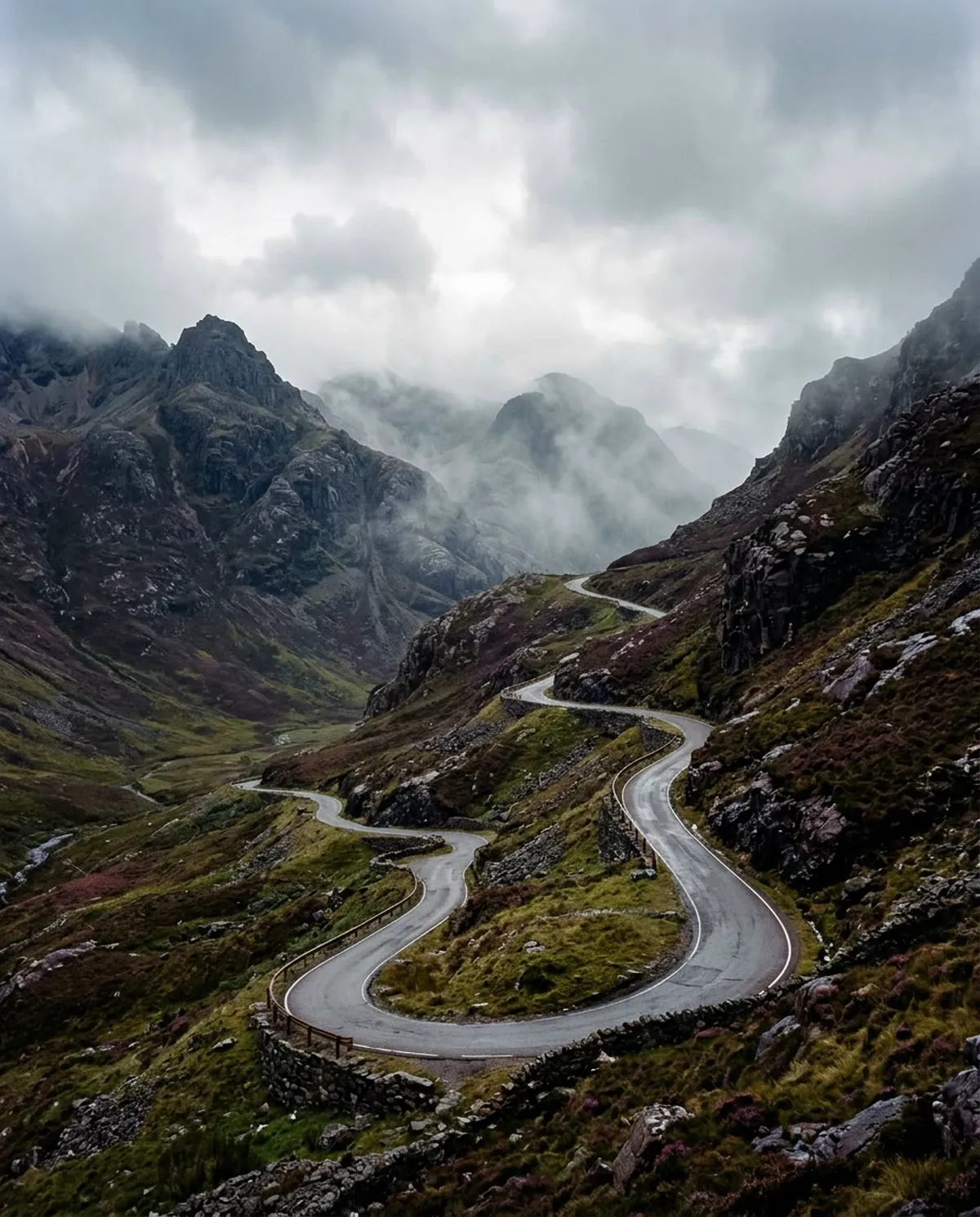
Day 1 takes you over the historic Bealach na Bà, a winding single-track pass that climbs over 2,000 feet from sea level in just a few miles. Mountain climbs draw heavier battery power during the ascent, but regenerative braking recaptures a substantial portion of that energy on the descent into Applecross. Pacing your climb smoothly helps maintain predictable range.
Highland weather changes rapidly regardless of the season. Strong coastal headwinds along the north coast can noticeably increase vehicle consumption, while wet conditions drop road grip. If winter weather, snow, or dense fog sets in, the high pass can close, requiring a detour via the lower coastal road through Shieldaig. If you enjoy driving highland routes, take a look at our practical advice on planning mountain pass elevation and battery range.
Where to stay along the route
Accommodations along the northern coast are limited and book up months in advance during the peak travel months. Arranging your overnight bases early secures comfortable rooms near local dining, pub warmth, and convenient village chargers.
Staying directly in coastal settlements like Shieldaig, Ullapool, Durness, Thurso, Wick, and Dornoch puts you within walking distance of local evening meals, leaving your car plugged in and ready for the next morning.
How Holiday Routes plans your Highland road trip
Road signs and speed limit markers across Scotland and the wider UK are displayed strictly in miles and miles per hour. Holiday Routes allows you to toggle your entire itinerary timeline between kilometres and miles at any point, so you can think and navigate in whatever measurement matches your road signs or dashboard preferences.
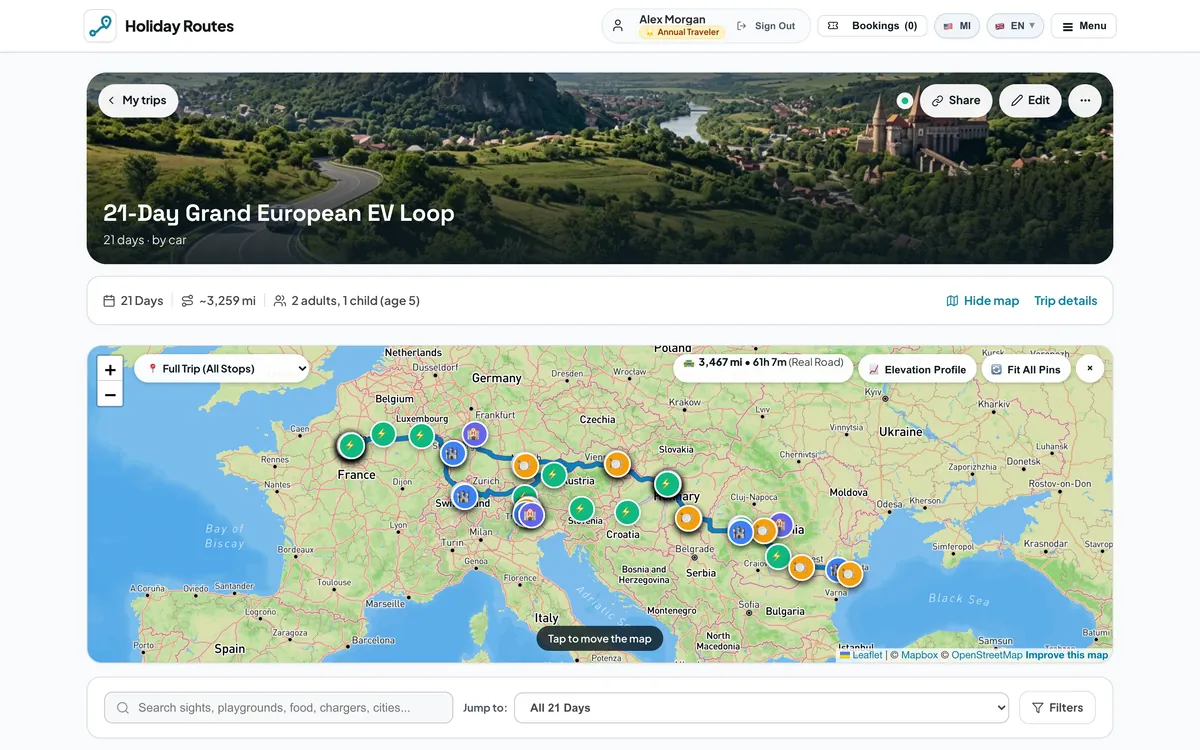
When planning an EV journey, Holiday Routes cross-checks your route stops against public charger maps, taking into account route elevation and seasonal temperature to provide estimated arrival and departure battery percentages for each stop. You can adjust stopping times, add scenic detours, and export your complete day-by-day plan to GPS apps like Google Maps, Apple Maps, or Waze when driving.
Frequently asked questions
Can you drive the North Coast 500 in an electric car?
Yes. The route has public rapid and destination chargers in major towns and villages such as Inverness, Ullapool, Thurso, and Wick. Planning charging stops around meals and booking accommodations with overnight charging makes the drive straightforward.
What should I know about driving single-track roads in Scotland?
Single-track roads have designated passing places marked by white diamond or square signs. Always give way to vehicles coming uphill, never park in a passing place, and pull to the left to let faster vehicles behind you overtake safely.
Should I plan my Scottish road trip in kilometres or miles?
All UK road signage, distance markers, and vehicle speed limits use imperial miles and mph. Setting your road trip planner to miles helps you match navigation warnings and speed limits directly to road signs along the route.
Plan your next trip with Holiday Routes
Free to start. Build a complete day-by-day plan, then change anything.
Plan your trip free →Keep reading
Driving in Italy: motorway tolls, ZTL zones and rules for a smooth trip
Essential advice for driving in Italy: how autostrada tolls work, avoiding ZTL camera fines in historic centres, mandatory car gear and emergency numbers.
Read the article →
A Provence campervan road trip: seven days from Lyon to the Riviera
A 7-day Provence campervan road trip from Lyon to Nice: quiet shoulder-season campsites, pitches with hook-ups, scenic gorges and family stops.
Read the article →
Driving in Austria this winter: vignette, Brenner toll and mountain rules
Preparing for driving in Austria this winter? Here is what you need to know about the digital vignette, Brenner tolls, mandatory car kit and emergency numbers.
Read the article →