 Holiday Routes
A Provence campervan road trip: seven days from Lyon to the Riviera
On this page
Planning a provence campervan road trip in the shoulder season gives you the best of southern France: quiet medieval villages, uncrowded river banks and campsite pitches with easy electric hook-ups. Traveling outside the midsummer heat makes mountain roads and narrow village approaches far easier to manage with a camper.
The 7-day Provence route from Lyon to Nice
This seven-day route links the Rhône Valley with the lavender country of the Luberon, the turquoise waters of the Gorges du Verdon and the Mediterranean coast. Driving distances are kept moderate so you have plenty of daytime to set up camp, explore historic towns and let younger travellers stretch their legs.
- Day 1: Lyon to Avignon via Orange (230 km, 2h 45m). Head south through the Rhône corridor. Stop in Orange to tour the Roman Théâtre Antique d'Orange, then pitch on the Rhône riverbank at Camping Bagatelle Premium Pitch on Île de la Barthelasse, looking across to the Pont Saint-Bénézet.
- Day 2: Avignon to Saint-Rémy & Les Baux-de-Provence (75 km, 1h 30m). Visit the ancient Pont du Gard and the immersive Carrières des Lumières art quarries in the Alpilles hills. Settle for the night at Camping Monplaisir Nature Pitch in Saint-Rémy-de-Provence.
- Day 3: Saint-Rémy to Roussillon & Manosque (115 km, 2h 10m). Drive into the heart of the Luberon. Walk the vivid red cliffs of Le Sentier des Ocres and visit the Musée de la Lavande before arriving at Camping Provence Vallée Pitch in Manosque.
- Day 4: Manosque to Lac de Sainte-Croix & Gorges du Verdon (85 km, 1h 45m). Cross the Plateau de Valensole lavender fields toward the dramatic limestone canyon. Rent a quiet electric boat on Lac de Sainte-Croix and stay at Camping Les Roches Lakeview Lot in Les Salles-sur-Verdon.
- Day 5: Verdon to Fréjus & Saint-Raphaël (98 km, 2h 00m). Descend through the foothills to the sea. Explore the Roman aqueduct ruins in Fréjus and relax at Base Nature François Léotard before checking in at Domaine du Colombier Motorhome Pitch.
- Day 6: Saint-Raphaël to Antibes via Corniche d'Or (55 km, 1h 30m). Follow the striking red porphyry cliffs of the Esterel along the Corniche d'Or. Stroll around Port Vauban to admire Le Nomade sculpture, then rest at Camping Les Embruns Shaded Camper Bay in Antibes.
- Day 7: Antibes to Nice & Promenade des Anglais (28 km, 0h 45m). Conclude with a relaxed coastal drive to Nice. Take the family through Promenade du Paillon playgrounds, climb Colline du Château for panoramic bay views, and spend the final evening at Camping La Camassade Quiet Camper Pitch in Tourrettes-sur-Loup.
Choosing pitches and campsite hook-ups in shoulder season
Spring and early autumn offer milder temperatures and much calmer sites than July or August. However, seasonal opening times vary across southern France. While municipal sites near major cities like Avignon remain accessible, some lakeside campsites near the Verdon close their gates by late autumn. Check campsite opening dates before you set off.
When booking pitches for an electric camper or caravan combination, look specifically for dedicated hardstanding or reinforced grass lots with 10A to 16A electric hook-ups. Having an onboard hook-up ensures that your heating runs comfortably during crisp shoulder-season nights without draining your auxiliary battery. You can read more about balancing driving stages with campground facilities in our guide to pitches, hook-ups and towing days.
Driving and parking a campervan in Provencal villages
Provencal perched villages were designed centuries before campervans existed. Hill towns like Les Baux-de-Provence and Roussillon feature narrow archways, steep stone lanes and strict vehicle restrictions. Attempting to drive directly into historic centres will quickly lead to tight corners and dead ends.
Instead, look for designated camper bays and park-and-ride areas on the outskirts of villages. Most major attractions, including the Pont du Gard and the Carrières des Lumières, provide clearly signposted coach and motorhome parking with higher clearance. Pay attention to height and width warning signs on secondary departmental roads (the D-roads), particularly around the limestone arches near the Verdon gorge.
Planning tip: Always carry a European two-pin camping adapter and a sturdy 25-metre extension lead. In rural French campsites, electricity pillars can occasionally be shared between several neighbouring pitches across a grass avenue.
Towing and electric range over hilly stages
If you are travelling with an electric tow vehicle, such as the Hyundai IONIQ 5 AWD pulling a light caravan, elevation gains and aerodynamic drag require thoughtful planning. The climb from the Rhône plains up toward the Plateau de Valensole and the Gorges du Verdon naturally demands more energy than flat motorway cruising.
High-power charging hubs along the main motorways make midday top-ups straightforward. For example, stopping at the A7 Aire de Montélimar Est (350 kW) on day one or the A8 Aire de Cannes Mandelieu (350 kW) on day six allows you to add juice while taking a family break. In rural areas, 50 kW to 175 kW chargers in market towns like Cavaillon and Riez provide reliable stops to keep your battery comfortably between 30% and 80%. When driving through hills, planning an estimated charging stop for every day based on terrain helps you travel without range stress.
How Holiday Routes plans your campervan journey
Holiday Routes helps you balance driving hours, sightseeing and overnight campground arrivals into a single, cohesive timeline. When you select campervan mode, the planner accounts for comfortable daily distances and keeps travel days manageable for everyone on board.
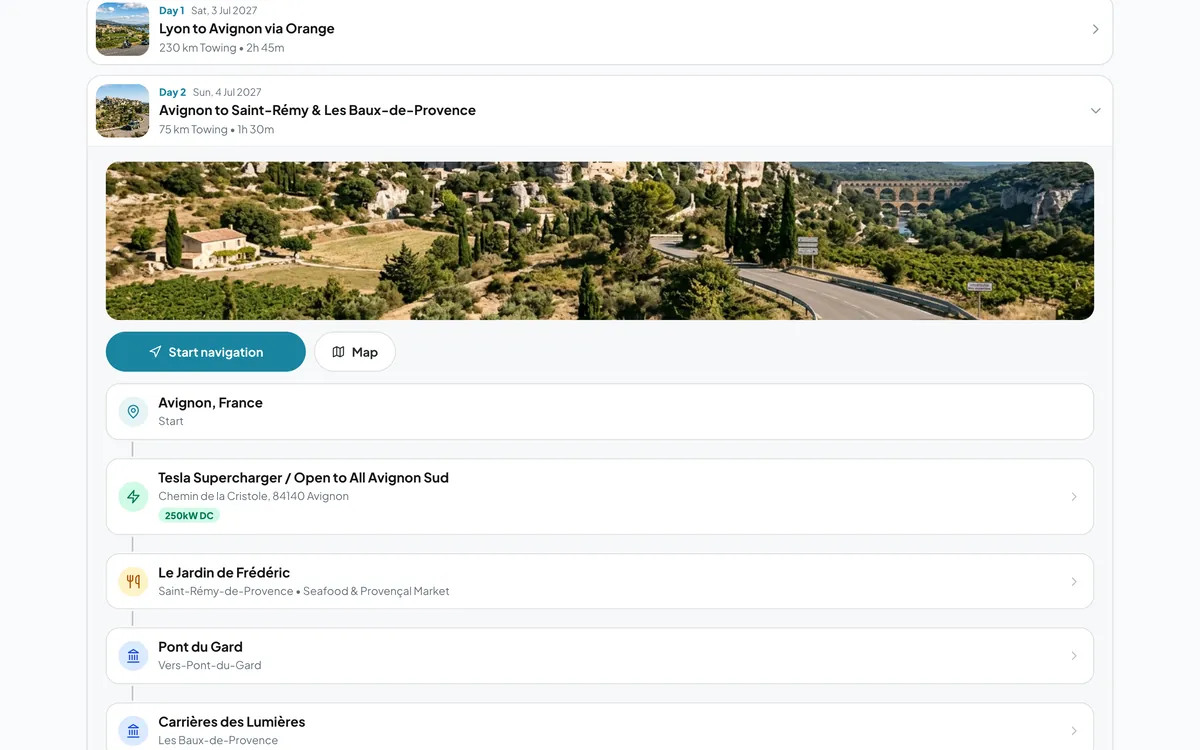
Your pitch is already planned: Towing distances, sights along the way and a campsite for every night — with the facilities you asked for. You can view your route map, check elevation changes across mountain stages, and keep all your campsite confirmations together in the app. For days without reliable mobile reception in remote valleys, you can print a neat printable road trip booklet containing your complete daily route and notes.
Frequently asked questions
What is the best time for a campervan trip in Provence?
May to June and September to October offer pleasant driving temperatures, quieter roads and readily available campsite pitches. Midsummer brings heavier traffic and hot weather, while some rural campsites close between November and Easter.
Can I wild camp in a campervan in Provence?
Wild camping (camping sauvage) is strictly regulated across France and broadly prohibited in regional nature parks like the Luberon, the Alpilles and the Verdon. Always stay at designated campsites or registered overnight motorhome stopovers (aires de camping-car).
Are tolls expensive for campervans on French motorways?
French motorways (autoroutes) categorize vehicles by height and weight. Small campervans under 2 metres fall into Class 1 (standard car), while larger motorhomes or vehicles towing caravans between 2 and 3 metres high belong to Class 2, which has higher toll rates.
Do I need an electric hook-up at campsites in spring and autumn?
Booking a pitch with electric hook-up is highly recommended in shoulder season. Nights in the Provencal hills can be chilly, and having shore power lets you run onboard heating and recharge appliances without relying solely on your leisure battery.
Plan your next trip with Holiday Routes
Free to start. Build a complete day-by-day plan, then change anything.
Plan your trip free →Keep reading
Scotland's North Coast 500 by electric car: a 7-day route around the Highlands
Plan a North Coast 500 electric car trip across the Scottish Highlands: a 7-day itinerary, single-track road tips, charging advice and route pacing.
Read the article →
Driving in Italy: motorway tolls, ZTL zones and rules for a smooth trip
Essential advice for driving in Italy: how autostrada tolls work, avoiding ZTL camera fines in historic centres, mandatory car gear and emergency numbers.
Read the article →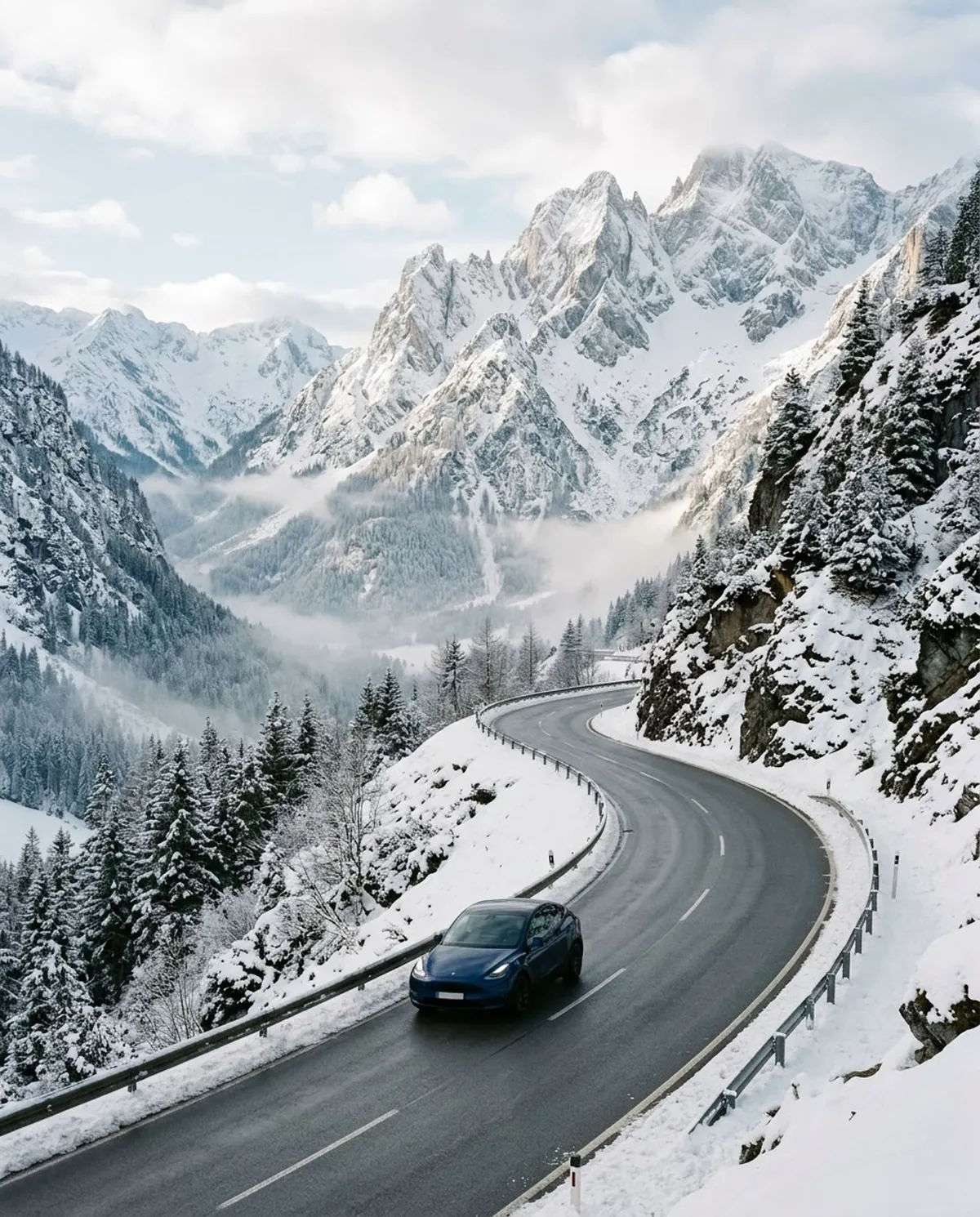
Driving in Austria this winter: vignette, Brenner toll and mountain rules
Preparing for driving in Austria this winter? Here is what you need to know about the digital vignette, Brenner tolls, mandatory car kit and emergency numbers.
Read the article →