 Holiday Routes
Renting a car in Andalusia: airports, old towns, tolls and tips for a smooth road trip
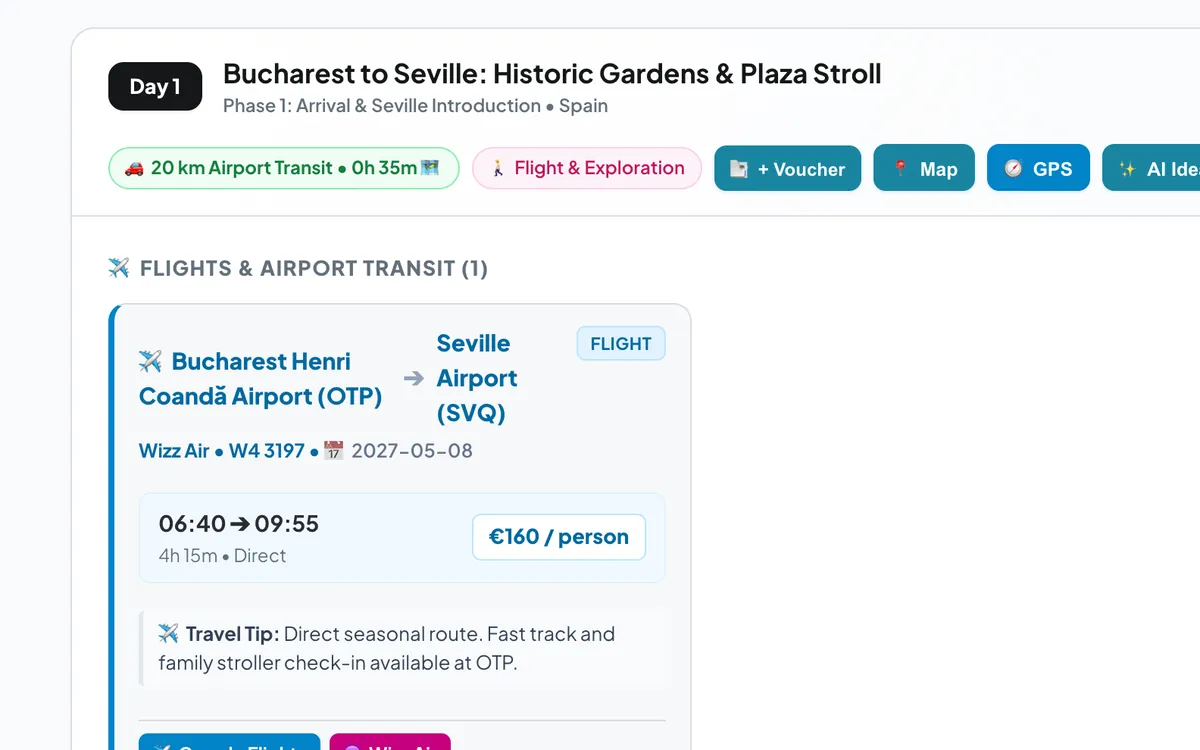
Andalusia is made for a car. The white villages, the mountain roads to Ronda and the stretches of coast between the big cities are hard to reach by train or bus, and the distances are short enough that you can see Seville, Córdoba, Granada and Málaga in one week. A few things are worth knowing before you pick up the keys, though — most of them about the first and last hour of the trip.
Which airport to fly into
Most visitors land in Málaga (AGP) or Seville (SVQ). Málaga has the most flights and the biggest choice of rental companies, which often means lower prices and more automatic cars. Seville is closer to the western half of the region — Cádiz, Jerez, the Sierra de Aracena — and puts you in the middle of a city worth two days on its own. Granada (GRX), Jerez (XRY) and Almería (LEI) are smaller and have fewer rental desks.
If the flights allow it, a one-way trip works well: land in Seville, drive east and fly home from Málaga. One-way rentals within Spain usually cost a little extra, so compare that fee with the time you save by not driving back.
Book ahead, and choose the car for the roads you will drive
Spring, Easter week and summer are busy, and automatic cars run out first. Book as soon as your flights are fixed.
- Size: a compact car is easier in narrow village streets and multi-storey car parks than an SUV. Luggage for two fits in most compacts; a family of four needs a bigger boot.
- Gearbox: manual cars are standard in Spain. If you don't drive one at home, filter for automatic — and book early.
- Electric? More fleets offer electric cars. They are pleasant on the motorways between the cities, but plan the charging around your hotels and the longer mountain climbs.
At the rental desk: what to check
This is where most surprises happen, so read the conditions before you fly and again at the desk.
- Driver age and licence. Many companies require drivers to be 21 or older and charge extra under 25. Some non-EU licences need an International Driving Permit — check the conditions for your licence.
- Credit card. The deposit is usually blocked on a credit card in the main driver's name. Debit cards are often not accepted for the deposit.
- Excess and insurance. Look at how much you would pay after damage (the excess) and what the extra cover at the desk costs, and decide before you arrive, not in the queue.
- Fuel policy. "Full to full" is the simplest: you pick the car up full and return it full.
- Photos. Walk around the car and take photos of every scratch before you drive off, and again when you return it.
- Safety kit. Spain requires a reflective vest and a warning light or triangle in the car. Check they are in the boot.
Keep the first day short
Between landing, baggage and the rental desk it can take two hours before you are on the road, in an unfamiliar car. Plan the first drive to be an hour or less — from Málaga airport to the coast or to Antequera, from Seville airport straight to your hotel in the city — and keep the long drives for the days after.
Old towns: park outside and walk
The historic centres of Seville, Córdoba and Granada are full of narrow one-way streets, and several have restricted-access zones watched by cameras. Driving in without permission can lead to a fine that arrives weeks later through the rental company, with an admin fee on top. Spanish cities are also introducing low-emission zones, and the rules differ from city to city.
- Book a hotel with parking, or a public car park at the edge of the old town, and walk in.
- If your hotel is inside a restricted zone, ask it before you arrive whether it can register your number plate for access.
- Street parking marked in blue is paid; white lines are usually free. Read the signs.
Motorways, tolls and speed limits
Most of Andalusia's motorways — the A-4, A-92, A-45 and most of the A-7 — are free. The main exception is the AP-7 toll motorway on the Costa del Sol west of Málaga, which runs next to the free A-7: faster in summer traffic, but not necessary. Limits are generally 120 km/h on motorways, 90 km/h on other roads and 50 or 30 km/h in towns, unless signs say otherwise. The alcohol limit is lower than in some countries, so the simplest rule is not to drink and drive at all. Rules change, so check them before you go.
Heat, mountain roads and timing
In July and August, Seville and Córdoba often pass 40 °C in the afternoon. Drive in the morning, keep water in the car and plan indoor visits or a long lunch for the hottest hours. The roads to Ronda, through the Sierra de Grazalema and up to the Alpujarras are beautiful but slow — count on lower average speeds than the kilometres suggest, and don't plan them after dark on your first days.
A first route: seven days from Seville to Málaga
A classic loop that works well as a one-way rental:
- Seville — land, pick up the car, check in. Two nights to see the cathedral, the Alcázar and Plaza de España on foot.
- Córdoba (about 1 h 45 min) — the Mezquita and the patios; one night.
- Granada (about 2 h) — the Alhambra (book tickets well ahead) and the Albaicín; two nights.
- Ronda (about 2 h) — the bridge over the gorge and the white villages around it; one night.
- Málaga (about 1 h 45 min) — the old town and the beach, then return the car at the airport.
Plan it all on one timeline
In Holiday Routes, create a Flight + Car trip and the flight becomes day one of the plan: the flight card with its times, then the drive from the arrival airport, then the rest of the day. Each following day shows the drive, the sights and the night's stay, with the distance and driving time. Add your flight tickets, the rental confirmation and your hotel bookings to the trip's bookings vault, so the reference code is ready at the rental desk. If you rent an electric car, choose the model and the plan adds the charging stops.
Frequently asked questions
Do I need a car in Andalusia?
Not for the cities alone — Seville, Córdoba, Granada and Málaga are connected by train and bus. A car makes sense for the white villages, the mountains and the smaller beaches in between.
Can I take a rental car to Portugal or Gibraltar?
Some companies allow it for a fee, others don't. Check the cross-border rules before you book; driving across without permission can void the insurance.
Is it better to pick up the car at the airport or in town?
The airport usually has more choice and longer opening hours. If you spend the first days in Seville or Málaga city without a car, picking it up in town on the day you leave saves on rental days and parking.
Plan your next trip with Holiday Routes
Free to start. Build a complete day-by-day plan, then change anything.
Plan your trip free →Keep reading
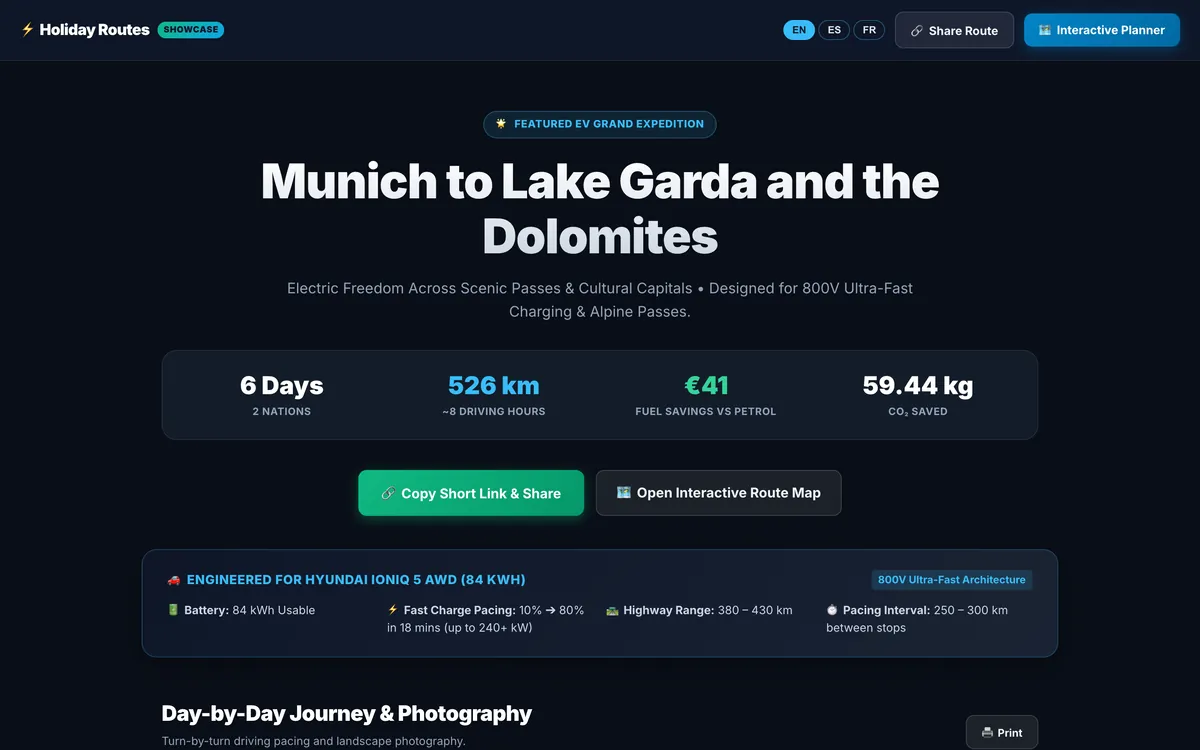
Share your trip as a travel story, with one short link
Turn your itinerary into a travel page with photos, food and stays for every day: one short link that opens on any phone, in English, Spanish or French.
Read the article →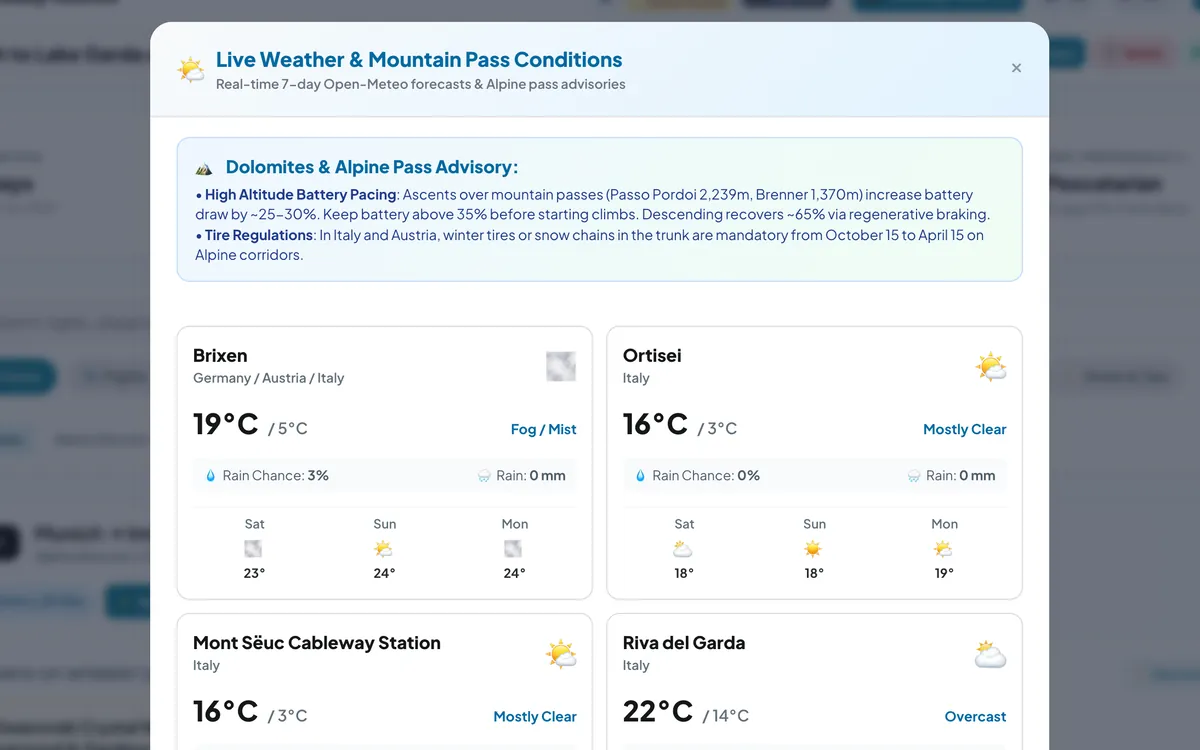
Check the sky before the pass: weather for every stop of your road trip
Live 7-day forecasts for every stop of your road trip, rain chances and temperatures, plus mountain-pass advice for the days that climb.
Read the article →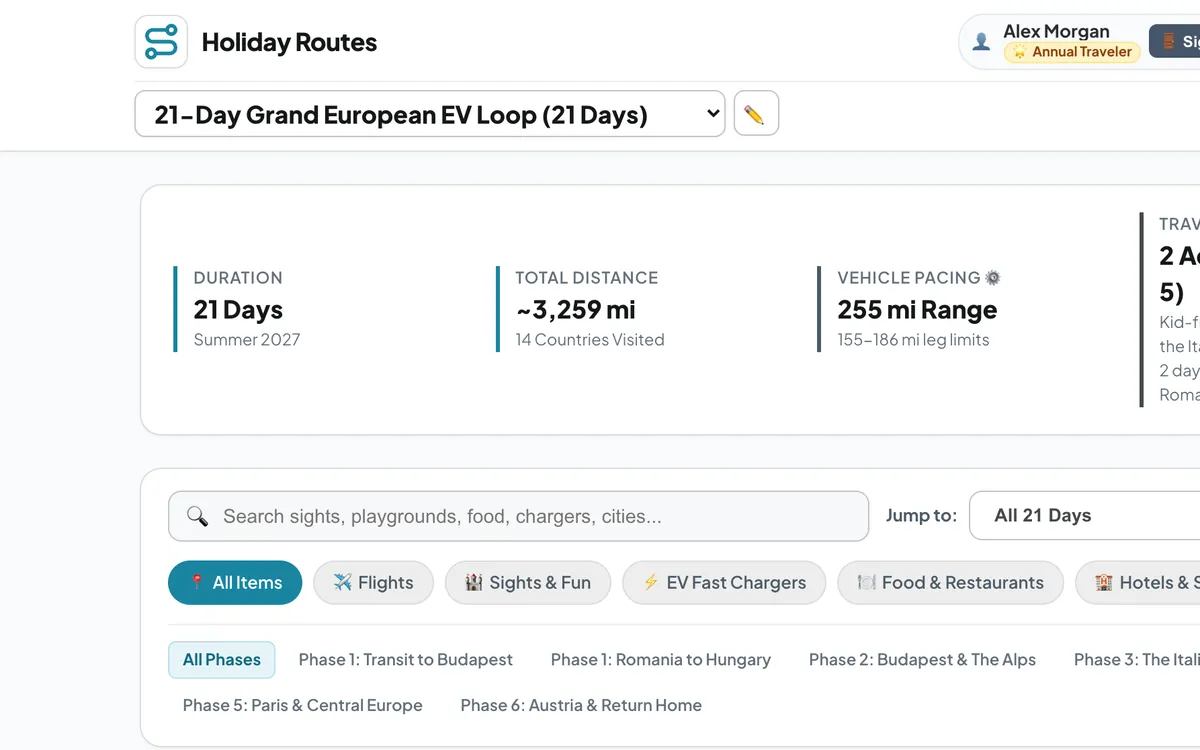
Kilometres or miles: a road trip planner for travellers everywhere
Plan road trips on any continent and switch every distance, climb and speed between metric and imperial units — km or miles, metres or feet, km/h or mph.
Read the article →